



This summer fad is here to stay
We spoke to canoe and paddleboard coach Richard Talbot-Jones MCIMSPA about water safety, accessibility and confidence
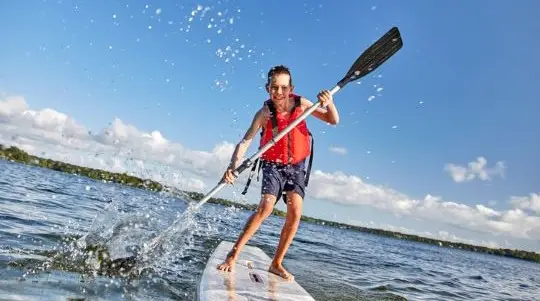
You’ve always been able to pick up a football from a corner shop or perhaps a pair of basic running shoes from the supermarket. It’s great – simple, accessible sports equipment that you can take to your local park and get active. In recent years, however, the market for easy-buy sports equipment has expanded – much to everyone’s surprise, it seems – into water sports. Every summer now, you don’t even have to go as far as your local sports shop to buy a full-sized inflatable kayak or paddleboard. You could be doing your weekly shop and return with a family canoe!
This has led to a boom in participation rates over the summer months. The low cost of equipment has meant that many sector practitioners are benefiting from a ‘try before you buy’ interest in classes and subsequent demand for gaining further aqua skills, too. But what does this mean in practice? And with recent tragedies highlighting the importance of water safety, how can paddle sports sustain their popularity?
We spoke to canoe and paddleboard instructor Richard Talbot-Jones MCIMSPA to find out more:
“Especially with paddleboards, the availability of equipment has really opened up the sport to people who just want to have a go. It’s also not very intimidating, as they’re essentially a big float like you might find at your local pool.
“For people who are just giving it a go, maybe for a selfie, the summer is when they’re most likely to try.
“Most of my coaching is done between March and October. So, when I take my sea cadets group out to a harbour, I might have a group of 10 kids and a couple of coaches. But it’s not a private space. We’ll see members of the public out on paddleboards, too. Sometimes they ask for tips, but not as often as you’d think they might.”
Spotting the dangers
With so many people getting active on the water without training, it’s common to spot safety concerns at popular sites:
“Sometimes you see somebody in danger, for example getting blown out of the harbour. They don’t know how to control the board. It’s hard to know what to do when you’re responsible for your group, but you do end up keeping an eye on other people.”
Richard goes on to compare the situation to what other sector practitioners might experience:
I imagine it’s the same for other practitioners, for example personal trainers. You can be working with you client in the gym, but out of the corner of your eye you see somebody lifting weights in a way that they could hurt themselves. Do you interrupt your session to step in, or do you just leave them to it?”
“You’d hope that things going wrong encourages people to join a club or get some lessons. Not only will they be safer and discover the gateway to more technical water sports skills, but it also fuels work for professional coaches.”
For those starting classes, though, safety can seem like a dull hurdle to getting stuck in. Richard explains that sometimes controlled environments can make it hard to get across the dangers involved:
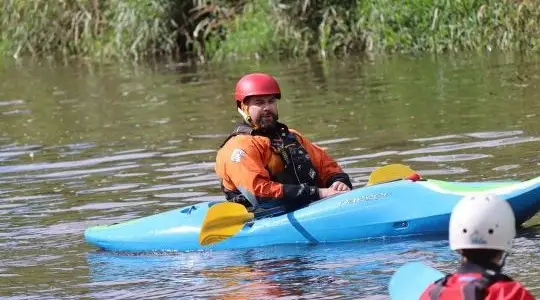
“When I worked for an adventure holiday provider, we had our own lake. There was no moving water, and you could probably stand up in the deepest part of it. In that environment, because it’s not visibly dynamic, it’s hard to get participants to appreciate that there are actually dangers. You usually get an accident in the first ten minutes with someone accidentally hitting someone else in the head with a paddle. They don’t think about needing to look where they’re going because the environment appears safe.
“On rivers, participants are usually more aware of the risk straight away because they can feel the water moving the boat. They understand that they need to learn to control it and use all their senses to work out where dangers are.”
Richard noted that the children he instructs now are very safety conscious:
“The sea cadets I teach follow a structured training pathway. They complete Paddle UK qualifications and we do a lot more rescue training with them. That means that some of them are quite vigilant when we’re out and get quite worried about members of the public. They’ll see people out in a blow-up kayak without a helmet on and ask me if we should tell them that they should be wearing one, and why.”
A new wave of participants
In spite of safety concerns, being in the public eye does the work for advertising professional coaching:
“We get a lot more people joining now after seeing us out on the water. The river is in use and very publicly most days of the week. Our group does canoeing, kayaking, paddleboarding and rowing. We play games and swim, too. When we’re out of season, we also run rescue courses and instructor training.
“People – particularly parents – see that it’s organised and safe and there are always qualified instructors around. While anyone can use the river at any time, people don’t always view water as a space that they can play in. So, with the support of structured sessions and coaching, we’re enabling people to spend more time outdoors and improve their mental and physical health in a way that might not have occurred to them.”
One of the core trends that Richard highlighted alongside the participation uptick is that of rising numbers of non-swimmers. Due to major cuts to school swimming programmes and the number of pools across the country, a vast number of people in the UK cannot swim. Recent research estimates the figure at one in six adults, creating a noticeable difference for coaches:
“There are more non-swimmers this year than ever before – it’s a trend. In Iceland, another island nation, it’s a legal requirement for children to have swimming lessons between the ages of 6 and 16. Why don’t we offer this?” asks Richard.
“In the meantime, we can’t deny non-swimmers the opportunity to participate. For safety reasons, we usually put them in different coloured kit so that we can identify who might need the most support in the water.”
Life-changing skills
While increased swimming skills would benefit everyone’s water safety, Richard points out that there are other learnings to take in an aquatic environment:
“Generally, there is a difference between being able to swim and being water confident. So, while we are not swimming teachers, we can focus on teaching non-swimmers simple things like pulling yourself towards where you want to go and keeping your fingers together. Even something as simple as a reminder that when they have a buoyancy aid on, they are not going to sink so there is no need to panic.”
While water sports can be a big step into the unknown for many, it can also be really empowering. Richard explains how building water confidence and safety enables people to make changes elsewhere in their lives:
“When you get apprehensive people, you have to encourage them to take a risk and build them up to it. When you get them to do something that an hour before they didn’t think they would ever try, it’s very fulfilling. I used to be a canoe instructor in the army. They deliver adventurous training to get people used to being in situations they’re uncomfortable with because the behavioural response and attitude translate to off the water, too. When people take that step in a canoeing lesson, they might become less apprehensive in other areas of their life, too.
“The opposite can also be true. For people with a very open attitude to risk who jump straight in, the fulfilment comes from getting them to focus on a specific skill thing and to work at it and improve.
“It’s challenging as an instructor to reign one lot in and encourage others along, but that’s what makes it interesting.”
More to look forward to
With no sign of the inflatables disappearing any time soon, professionals can expect to see more and more people giving water sports a go. In spite of the increased risk, practitioners should see the new interest as a positive and an opportunity to show more people the fun and benefits of canoeing, paddle boarding and more.