



Bespoke planning for your clients – the how, what and why
Sian Rees from Elite 82 explains the process of creating a bespoke plan, and the importance of personalisation
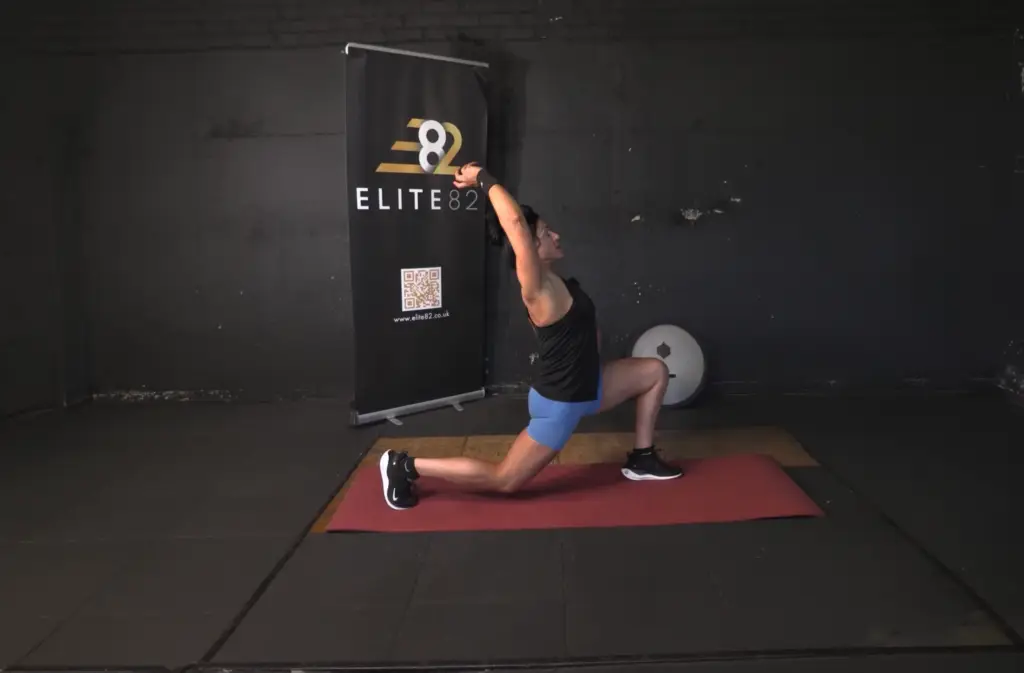
Sian Rees MCIMSPA is a high-performance coach who has worked in the sport industry for over 20 years. After working in various settings including schools, football academies and professional football clubs, she set up her own company, Elite 82, and now works with athletes holistically across a range of disciplines.
Generic training plans are now more accessible than ever – social media platforms such as TikTok and Instagram make it easy to create and share training programmes to a mass audience. Fitness now takes up a huge proportion of content on these platforms. Alongside influencers sharing their workout routines to their viewers, it seems that we have forgotten the power of a bespoke, personalised training plan.
Building a bespoke plan for your clients can be crucial for their development, safety and satisfaction.
As a sport and fitness professional, you can make sure that you set your clients up for success and safety by taking the time to create a personalised plan with them. With the expertise of different sports and fields, Sian discusses how a holistically athlete-centred approach has worked for her clients.
The key to success
“Your health does not exist in a vacuum,” Sian begins. “You cannot separate your physical and mental health. You cannot separate that from nutrition.
“When it comes to high performance, bespoke programming is key. It’s the difference between winning and losing. I’ve got master athletes that are still improving their time and performance, and that’s because their programme is tailored to them – it will accelerate their results.
“We want to reduce people’s illnesses and injuries – we want everybody to live a long life and run around with their family and of course win the competitions and get that starting shirt on their dream team”.
The importance of creating a bespoke programme
Whilst generic programmes are time saving and quick to produce, there can be dangers with providing these to your clients.
“It can lead to injury and illness from overtraining,” Sian explains. “Depending on age and ability, load requirements will differ.
“A generic plan does not target your individual physiology, movement pattern or stage of development, which can have long term implications. This can reduce performance capacity and increase the risk of illness and injury.
“There are billions of people on this planet, and not one of us moves the same. Human observation and interpretation remain central to effective coaching. Effective coaching requires direct observation and a holistic understanding of the individual – how they run, how they move and how they respond to load. From a systems and performance perspective, I ask questions. What is the most efficient intervention for this individual? Does it match their load tolerance, address movement dysfunction and integrate recovery science effectively?
“The idea is longevity – you want to be pain free and have a happy and healthy life for as long as possible. You reduce anything you do to put yourself at risk, whether it’s poor nutrition or the wrong medication, and training is no different to that. If you do the wrong training and periodisation is incorrect for age, event or time of season, you can cause serious injury. Then you’re in trouble. The fitness industry is over saturated, and much of the information lacks context or accuracy, especially when it comes to elite, adolescent or masters training.”
What do we need to factor into a training plan?
Whether you are working in elite sport, community sport or on the gym floor, everyone you coach will have different goals and different anatomy. Bespoke plans allow you to assess the individual and adapt routines for instances such as muscle imbalances, length of tibia for example, or advance exercises to enhance adaptation once entry-level exercises are perfected.
Age needs to be considered – are they a teenager going through maturation? Are they in an older age group where they are more susceptible to muscle loss? If they are female, are your tailoring their plan around their menstrual cycle?
Some clients will have the goal of injury prevention or rehabilitation, whilst some want to build up to achieve a personal best in their chosen discipline. A client’s daily activity and the sports-specific demands also play a big role, Sian explains:
“A 60-metre runner is doing a different programme to a 200-metre runner. A goalkeeper has a different programme to a centre midfielder and to a striker.
“Right now, I have a 14-year-old MMA fighter who wants to fight in the Olympics in eight years’ time. You should never train a maturing teenager the same as you would train an adult. You need someone who understands stages of development and maturation so that natural talent and genetic potential are maximised. I also have an array of athletic performers and footballers, none of whom are on the same plans.”
So, how do you build a bespoke plan?
1. Assess
“The first thing I do is an assessment,” Sian describes. “I do this in a confidential area, and we allocate time to talk to the person.”
“I need to build a relationship with them so that they are honest about what their routine consists of and their vices. I need to listen and understand their goals and ambition. You can only get an understanding about the person sitting in front of you through eye contact, body language and conversation.
“I need to know their health history, their genetic history, a bit about them and their personality – what is their sleep routine? What are they eating? Do they have regular periods? Do they struggle with low testosterone? Do they struggle with their mental health? As a high-performance specialist, you need to listen and take account for all of these questions confidentially and in a secure environment. These questions not for the changing room in public – they’re very personal.”
2. Practical session
The second stage is a practical session. Sian uses this opportunity to look at a range of physical assessments:
“I can look at their mechanics, such as if their tibia or fibula is long. I conduct a postural assessment, I complete functional movement screening tests, assess movement patterns – hip hinges, bridging, squatting, and assess how restricted their hips, back or joints are. I also investigate things such as shoulder mobility or if their thoracic muscles are tight. I also collect data where possible using handheld dynamometry.
“All of these, with a combination of knowledge and detail, gives me a full physiological and psychological picture. Then I can build out a programme for an individual.”
3. First planned session
Now is when you start a structured session with your client. Sian discusses:
“We walk them through it again and make sure that they are comfortable with the plan.
“When they’re training and they’re away from me, they film their sessions and send it to me so I can give them feedback. I look at how they’re moving and give them pointers – it can be technical or even tactical. Are they moving with fluidity, do I see a problem occurring, do they have an imbalance? Is arm speed improving?”
4. Tweaking the programme
As clients develop, whether in performance, age or the time of the sporting season, the programme may be altered.
“Athletics, for example, have been on a winter training programme and have transitioned for the indoor season. Football works in quarters, and the training varies – towards the end of the season it becomes more about injury prevention,” says Sian.
How long should my programmes be?
“Periodisation is imperative,” Sian says. “Generally, I’m working on 12-week blocks, as it takes 12 weeks for physiological adaptation to take place. I work my mesocycles in four weeks, and we do three mesocycles in total. It’s progressive, and then we change it again generally at 12 weeks.
Ensure you are appropriately qualified
Bespoke plans can be time consuming, but you also need to have the knowledge to be able to put a plan together in the first place. As a physical activity professional, upskilling and specialising in specific areas can give you the tools to be qualified and confident to make judgement calls on your client’s training programme. Remember, you can use the CIMSPA Endorsed Training Directory to find training that suits you, add strings to your bow and give your clients confidence.
“There is so much detail – are their exercises sport specific? How can I improve their life balance with training? What about their performance and technicalities of movement patterns?” Sian says. “This knowledge doesn’t come quickly, it comes with experience, time and actual interaction that you’ve had with human beings. Observing, coaching, leading and mentoring.”
“It has time constraints. I could produce a template for you on an app within 60 minutes, but that will be the same as what hundreds of other people are doing in your gym. If we’re looking at something specific, it takes a few days to build a bespoke plan. Mental health, supplements, nutrition also come into it. Bespoke planning takes technical and scientific knowledge. Just like when you’re going to see a consultant, you have to have that level of education to be able to assess the individual in front of you.”