



Rediscovering humanity
A PT’s analysis of the modern fitness industry
When personal trainer Adam Spaven MCIMSPA picked up an injury, he experienced an immediate cut-off from both his professional work and personal training goals. While on the sidelines, he took the time to reflect on how the fitness industry approaches connection and some very human pitfalls.
The sofa view
“For seventeen weeks, the path was clear. Every mile run, every meal prepped and every early morning in Bolton was a deposit into the Manchester Marathon bank. Then, the sofa phase arrived – not by choice, but by the reality of a chest cold. An ‘Act of God’ in any insurer’s book, this was compounded by a physical injury sustained while walking the dog. It was a wall of recovery that no amount of hustle culture could climb faster.
Sidelined on my sofa, mourning four months of effort, I received a notification chime. Within two hours of the race finish, the race organisers prioritised sending out a £59.99 entry link over space for human recovery. This began a professional autopsy of that moment, investigating how a very human sector has been changed by modern fitness culture.
The problems
Guilt
This instance is a prime example of how businesses in the sector can sometimes lack a human touch in their marketing efforts.

Manchester Marathon’s ‘sign up for next year’ email targeting 15,000 non-finishers could be viewed as exploitative – by issuing entry links while recipients were at their lowest physical and mental ebb, the missive capitalised on the guilt of the missed medal. This is similar to the recent trend of opening event ballots extremely far in advance of the day.
We know that rest and recovery is an essential part of training, so putting the pressure on to train at inappropriate times is counterproductive. By creating systemic pressure to train at all times, through illness and injury, participants are encouraged to contribute to the sector’s economy at the cost of their own wellbeing. This can only result in further illness, injury and eventual dropout, harming long-term participation rates.
Aesthetic expectations
During a recent interaction at a local establishment, my professional credibility was audited via a blunt question: “Shouldn’t you look more … jacked up?” This wasn’t an act of aggression, but of unconscious enforcement. The critic was voicing the industry’s most toxic narrative: that expertise is a byproduct of a specific look.
When the public uses terms like ‘jacked up’, they inadvertently expose a systemic deception. In professional discourse, ‘jacked’ implies a level of hypertrophy suggesting pharmaceutical intervention (steroids). Yet, for the layperson, this extreme has been marketed as the minimum entry requirement for a practitioner. By demanding this often-unnatural aesthetic as a baseline for competence, the public levies a tax that ignores health, longevity and natural limits.
When I challenged this – asserting the reality of a 41-year-old in a recovery phase – the critic retreated behind a dismissive response. This encounter highlights a systemic issue where the public audits a trainer based on looks rather than professional credentials. Both AI-generated and real fitness influencers online propagating this highly polished image lack the genuine human connection that provide the ultimate foundation for long-term client trust.
The headphone barrier
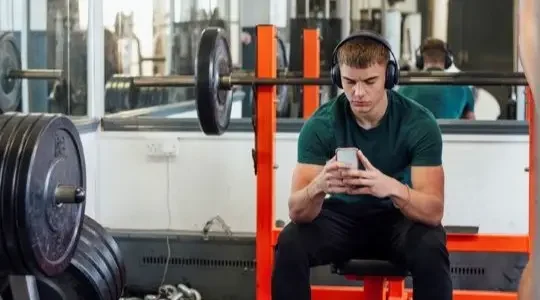
This online culture of disconnect has also extended to the gym environment. While the old-fashioned grunting of gyms gone by didn’t appeal to many, the silent environment of the modern fitness suite raises new challenges.
We use headphones and scrolling as an anaesthetic, numbing the noise of real life. Although they can support people as ‘armour’ for entering an environment in which they feel uncomfortable, that armour also stops gymgoers from opening up and connecting with those around them. While occupying a public space, headphone users remain in a private zone that creates a sense of parallel play rather than community.
To blame the current state of isolation on a global pandemic is a convenient oversimplification. Several years on from the Covid crisis, can we break down this digital shield?
For fitness professionals, we need to act as tribe leaders rather than purely safety marshals. For those who manage gyms, how can you use environmental psychology to create an inviting space? By reducing sensory distractions like screens and intrusive music, we can transform fitness facilities into hubs of human connection.
The solutions
The blueprint for recovery
The solution to these modern challenges isn’t more technology – it’s more humanity. We find this blueprint in groups like Men and Women in Sheds. In the shed, you aren’t a lead or a conversion. You are a person with a project.
The shed offers belonging without performance. You don’t have to look a certain way to be in the shed. This organic mentorship is how we as sport and physical activity professionals should be promoting our work. By focusing on how people feel rather than their progress in data and connecting with them on a personable level, we can make as big a difference on their mental health as pioneering organisations such as this. This way, we can keep them as consistent clients for our businesses with a human touch.
Recommendations for the sector
To create lasting and widespread change, we need to shift mindsets in several areas:
- We need to use our professional standards to spread the message of relatability over muscularity. By educating clients on our training and expertise as well as our ability to work with their bespoke needs, we can change the expectation of quality training coming from (exclusively) a stereotypical professional.
- We need to create social training environments where clients feel comfortable switching off from technology and supporting each other and we as practitioners can create connections.
- We need to ensure that our marketing is sensitive to the ups and downs of human experience. By allowing space for participants to recover from injury or have a break from training for any reason without pressure to rejoin, continue or start something new, we can build trust and deep relationships.
Fitness is not a transaction – it is a tribe. It is time that we as fitness professionals started being a partner to our clients and holding up our part of the bargain.
Conclusion
Over the course of this 17-week reflection, a clear truth has emerged: the modern fitness industry has a curated image perpetrated by social media algorithms and unqualified influencers’ ‘guarantees’.
In reality, sustainable health is found in the balance between productivity and recovery. It is found in the willpower and actual work of a person navigating a real life. While most dedicated sector professionals are already well aware of this, there is more that we can do to ensure this message reaches our audience. Our work hasn’t even begun until the human connection is established.”
About the author
Adam Spaven is a Bolton-based fitness professional focused on the interaction between physical resilience and psychosocial reality. At 41, with years of experience navigating the high-pressure standards of the industry, he has become a vocal advocate for “relatability over muscularity”.
He is a firm believer that the most important work a trainer does isn’t measured in inches or reps, but in the strength of the human connection.
This article and any promotion within it have been written by Adam Spaven MCIMSPA, a CIMSPA member.
The views expressed within this article are those of the author and do not necessarily reflect those of CIMSPA.