




National recognition for Prehab4Cancer
The Greater Manchester programme grows its impact as it launches education initiative for leisure centre staff
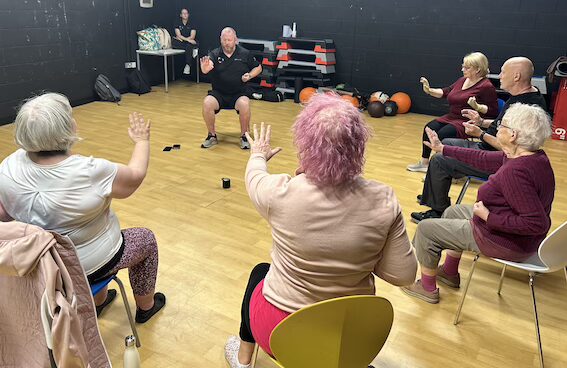
Experience, education and data garnered by the pioneering Prehab4Cancer (P4C) programme in Greater Manchester has helped to shape national guidelines on cancer care and has been adopted by the NHS and Macmillan Cancer Support.
The updated guidance builds on that first published in 2019, the year of P4C’s inception. The new information supports practitioners to provide exercise, nutrition and wellbeing advice and support to patients with lung, colorectal (bowel) and oesophageal and gastric cancers, often referred to as upper GI cancers.
P4C was, and still is, the first UK prehabilitation and recovery programme for cancer patients delivered through integrated care systems. It was established via a partnership between GM Active, a collective of 12 public leisure centre operators in the city-region, and GM Cancer Alliance. It facilitates engagement in exercise, nutrition and wellbeing assessments and interventions before, during and after treatment.
The 2025 update has been developed with input from Dr John Moore, P4C’s Medical Clinical Lead, and Zoe Merchant, its Allied Health Professional (AHP) Clinical Lead. It is based on a systematic review of designing and delivering cancer prehabilitation services.
The programme positions prehabilitation at the forefront of cancer treatment on a national scale, setting out clear guideline statements and recommendations as well as providing practical information to help organisations develop prehab services for their local populations.
It also reflects the growing acceptance of prehabilitation as a core component of treatment and highlights the need to expand provision, particularly through collaboration – an area where the leisure sector can play a key role.
The guidelines include a workforce matrix, advocating that specialist exercise instructors be an integral part of the nationally recognised workforce required to support patients undergoing cancer treatment through prehabilitation.
Jack Murphy, P4C Programme Leader, says:
“The six years we’ve been supporting cancer patients in Greater Manchester have enabled us to now see the emerging trends that prove that with exercise and our support, people can take a proactive role in their own care and have a positive impact on their health outcomes.
“Receiving a cancer diagnosis can have a profound impact on a person’s emotional wellbeing, but by engaging in P4C, patients are empowered to take back control of the diagnosis while optimising their physical and mental condition, which helps them to cope better with the rigours of cancer-related treatment.”
What does a P4C programme look like?
P4C patients are encouraged to attend at least two sessions each week, ideally three. They are also urged to establish a walking routine and make use of a home exercise guide around their scheduled supervised sessions.
A typical standard timetable for a patient looks like this:
- Moderate to high intensity exercise based on the reduced-exertion, high-intensity interval training (RE-HIIT) principle with built-in progression and increased workloads three times a week. This is ideally combined with rest days when patients are encouraged to go for a walk or so do some other physical activity, such as gardening.
- Aerobic training (aiming for at least 20 minutes), which, depending on the patient, could be exercising on a static bike or on a treadmill, aiming to hit a heart rate of 60-80% of their maximum.
- Fifteen minutes of strengthening the quad, core and shoulder muscles, concentrating on the larger muscle groups required to aid activities of daily living and suited the patient’s individual need.
New evaluation report reinforces efficacy outcomes
P4C has recently been evaluated by NHS Arden and Greater East Midland Commissioning Support Unit as part of a recurring funding process. The findings reinforced those of a similar evaluation in 2021 when P4C was first granted recurring funding.
Although the full report is not yet published, the initial findings showed a threefold increase in annual referrals since P4C’s inception (from 604 in 2019 to 1,782 in 2025). It also highlighted positive outcomes for patients, including significant improvements in quality of life and functional capabilities, better strength and aerobic capacity and improved nutrition.
Patient outcomes were determined using a number of benchmarks:
- The 6-minute walk test (6MWT), which, through measuring aerobic capacity and VO2 max, indicates improvements that support better outcomes from surgery, a reduction in post-operative complications, reduced impact of oncological treatment and better management of side effects
- The 60-second sit to stand and hand grip strength tests, which demonstrate improved lower limb function and overall strength respectively, highlighting a greater ability to perform activities of daily living and supporting an enhanced recovery
- Patient-Generated Subjective Global Assessment, reduced scores in which highlight a patient’s improved nutritional status
- World Health Organisation Disability Assessment Schedule (WHODAS)
- International Physical Activity Questionnaire (IPAQ)
The latest outcomes corroborate independent research first used to secure recurrent funding for Greater Manchester P4C, which found that hospital patients were able to be discharged home sooner and enjoyed a better recovery.
Headline results for colorectal patients showed widespread impact on both individual patients and hospital capacity:
- Prehab patients on average spent 36 hours less time in hospital.
- Prehab patients on average spent 10 hours less in hospital critical care.
- The shorter hospital stays ‘released’ 550 ward bed days and 146 critical care bed days, resulting in increased capacity and patient flow.
- Bed days ‘released’ from 1,000 colorectal prehab patients enables 179 additional patients to access timely surgery.
- Bed days ‘released’ per prehab patient cover the costs involved in setting up and delivering P4C for a year.
Education and upskilling for leisure centre staff
P4C is now conducting a workforce development and upskilling initiative for staff working in the 99 leisure centres encompassed within GM Active. The training aims to increase focus on embedding rehabilitation within community and leisure-based settings.
A targeted education and upskilling workshop in April will include exercise components, including HIIT training, education about nutrition and cancer-specific clinical considerations.
Delivered by prehab and rehab specialists, specialist clinical staff and cancer nurse specialists, the workshop will feature Level 1 psychological training on communications. This will guide practitioners in having conversations to better support patients dealing with the emotional impact of a cancer diagnosis.
Accredited by Sage and Thyme and developed by Manchester NHS Foundation Trust, it is the UK’s most widely taught and evaluated foundation level communication skills training. Topics focus on practical and relevant knowledge for practitioners, including:
- noticing when people are worried or upset
- responding in a controlled and organised way
- guiding the conversation from their worries to their support
- being supportive without having to fix their problem.
Jack Murphy explains:
“The aim is to strengthen leisure centre staff knowledge, skills and confidence in supporting people living with and beyond cancer. This will ensure that patients’ needs are met safely and effectively by our leisure centre colleagues supporting patients on behalf of P4C during the rehab phase of their treatment.
“Importantly, though, this is not a locally driven aspiration for Greater Manchester, but something endorsed in the updated national guidance. It underpins the rationale for our education day, helping colleagues understand both the importance of their role and why this work is being taken forwards.”
Find out more
More about Prehab4Cancer
Zoe Merchant and Jack Murphy have been discussing the importance of physical exercise and the P4C programme on the Four Ways Forward podcast, which you can listen to here.
“This is the first of a series of four podcasts and blogs about how we can integrate more physical activity across the NHS and what key actions health and care professionals can do to support this strategic shift towards movement and staving off or preventing ill health.
“It demonstrates GM and P4C deliver an exemplary prehabilitation service, having been chosen to cover prehabilitation in this podcast series,” says Zoe Merchant.
More about GM Active
GM Active is a collective of 12 leisure and community organisations across Greater Manchester all sharing the same vision – to get more people physically active so they can live healthy, happy and longer lives.
It is a not-for-profit community interest company (CIC), which manages the majority of publicly owned leisure and physical activity services on behalf of the 10 local authorities in Greater Manchester.
Image credit: P4C sessions staged for UKactive National Fitness Day