



What Clean Sport Week taught us about misinformation online
UK Anti-Doping discuss the legacy of Clean Sport Week, the reason behind this year’s theme and how they are planning to build on the success
Tony Josiah, Director of Education, Insight and Global Engagement at UK Anti-Doping
There is a statistic I keep coming back to: close to a million more people took part in physical activity in the UK last year, according to research from UK Active. More women are lifting weights. More older adults are strength training. Participation is up, and that is something worth celebrating.
But during Clean Sport Week (UK Anti-Doping’s annual awareness raising campaign) this year, we at UK Anti-Doping shone a light on something troubling growing in the shadow of that progress. And the more people who know about it, the better placed we all are to respond.

A theme that speaks to everyone
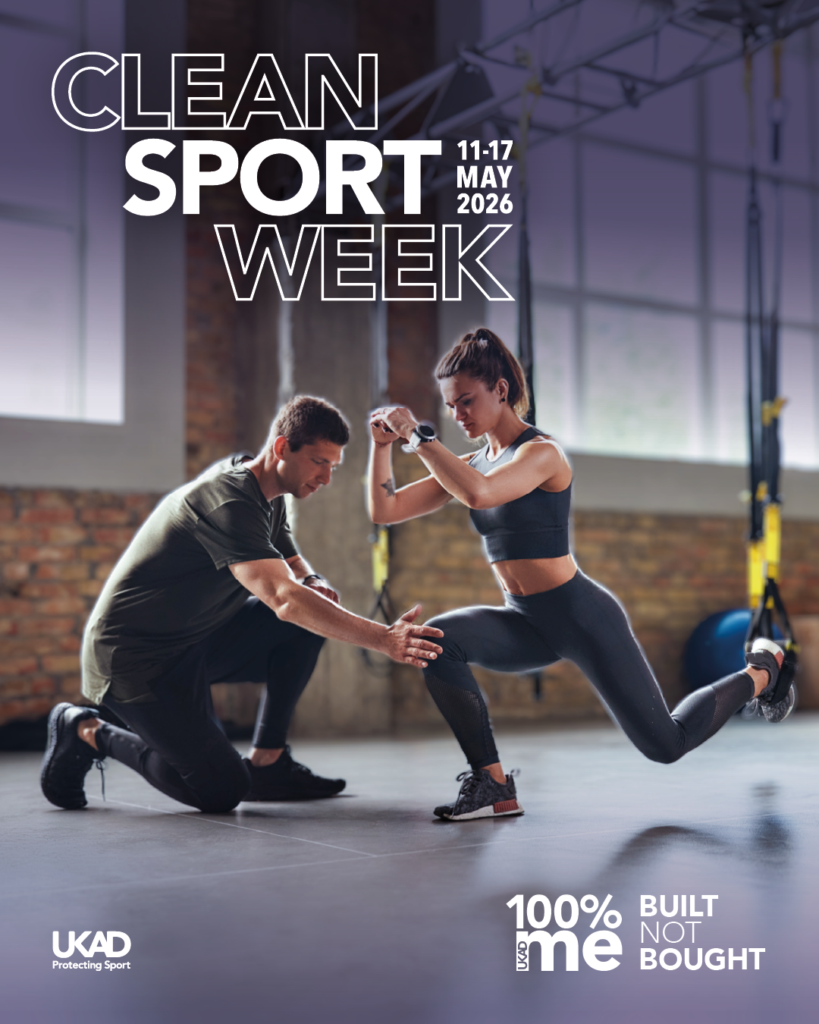
This year’s Clean Sport Week (11–17 May) was built around a theme that I believe is as relevant to a fitness enthusiast/gym-goer as it is to an elite athlete preparing for a major competition: Built Not Bought. 100% Me.
It sounds simple and it is meant to. Because the message at its heart is straightforward – your hard-earned achievements belong to you. The hard work, the setbacks, the dedication, the time and the progress – none of that can be bought, and none of it should be put at risk. Whether you are a professional athlete or someone who has just started lifting weights on a Tuesday evening and is quietly proud of showing up, that message is yours.
The theme was a direct response to the increasing misinformation we are seeing online, targeting young people in particular, in relation to image- and performance-enhancing drugs (IPEDs).
So, whilst education and awareness raising is pivotal for athletes and young people alike when it comes to this topic, it’s also important that each of us working in sport or the fitness sector educate ourselves and learn the facts so that we can better guide and support the next generation to make informed and healthy choices.
What our research found – and why it raises alarm bells
During our Clean Sport Week campaign, we published the findings of a survey we commissioned, and the results were striking.
A third (33%) of young people aged 16 to 25 who responded told us they had purchased performance enhancing drugs known as SARMs – selective androgen receptor modulators – at some point in their lifetime, after seeing them advertised or promoted on social media.
42% of young people surveyed report seeing ‘superhuman’ or ‘shortcut results’ content on social media at least once a week in the past 30 days. This includes 19% who report seeing such content several times per week or daily.
A quarter (25%) had not heard of any health risks associated with IPED or SARM use.
Those numbers should stop all of us in our tracks.
SARMs were developed in the 1990s as experimental potential treatments for conditions such as osteoporosis and muscle-wasting diseases. Early concerns about their side-effects meant that no SARM has ever been approved for medical use by any medicine’s regulator. They are illegal to sell for human consumption. They are prohibited in sport, meaning athletes could face a ban for taking them. Clinical evidence links them to liver damage, liver failure, heart inflammation and thrombosis – all potentially life-threatening conditions.
And yet, online, they are being sold in tablet form, marketed openly as safer alternatives to steroids, often promoted by influencers with little to no mention of the associated risks.
The week itself – highlights and voices
Clean Sport Week gave us an opportunity to speak directly to people working in sport and across the physical activity sector about this issue. As a result, we saw elite athletes, young people, media outlets, national governing bodies and a range of other organisations and individuals get behind this year’s message.
One voice that I think captured a key point of Clean Sport Week was Javier Bello, beach volleyball player and UKAD Athlete Commission member, who said: “I think it’s really important for, generally all athletes, to surround themselves with the right people, to encourage the right habits, but also to kind of inspire each other as well and motivate each other… We’re all in it together”. This is an important reminder for all of us across the sport and fitness sector – to surround ourselves with the right people and that includes who we follow on social media too, all of which can influence the decisions we make.
Throughout Clean Sport Week, we worked to tackle the misinformation online about SARMs head on. We shared accurate health information through our website and social channels, we worked closely with our Athlete Commission, and we were glad to be partnering with CIMSPA throughout this time – helping to reach those of you working closest to the public, in gyms, leisure centres, studios and sports clubs. Getting accurate information into these fitness spaces is essential to protecting the next generation from dangerous and misleading content online about IPEDs.
The misinformation around SARMs in particular is sophisticated and persuasive. It is not just somebody posting something dubious in a forum. It is polished content, presented by credible-looking figures, designed to appeal to people who have aspirations to change their body image and who want quick results. Understanding what is being said online about these substances and learning the facts is the first step to countering it effectively.
What comes next
One week of activity – despite getting great engagement and landing well – is never going to be enough on its own. Clean Sport Week was a springboard to bringing awareness to this issue, but the work does not stop when the week does.
That is why we have commissioned new independent research through Swansea University specifically examining how SARMs are being marketed and sold online and how influencers are being used to spread misinformation to young audiences. We will publish those findings, and the recommendations that come with them, later this year. The aim is to build a much clearer, evidence-based picture of the full scale of this issue – and what else might realistically be done to address the harms.
We will continue to raise awareness and create new educational resources on the matter, helping not just those in sport but the wider public, as this is not just a problem in sport but a public health issue too.
What you can do
For those of you working in the sport and physical activity sector – as coaches, instructors, facility managers, personal trainers or in any other role – there are practical things you can do right now.
If you see SARMs being marketed as a food, a supplement or for human consumption, please report it to your local trading standards authority. If you work with athletes and have concerns about doping, visit UKAD’s new SARMs Factsheet on its website for accurate information and guidance. You can also report suspicions of doping in sport confidentially through the Protect Your Sport (whistleblowing) platform.
But also, talk to the young people around you. Be curious about what they are seeing online. Be honest about the risks. You do not need to be an expert in this to have a meaningful conversation about why shortcuts are not worth it. The professionals, coaches and mentors in young people’s lives carry enormous influence – often far more than they realise. An algorithm promoting a SARM to a 17-year-old has no idea who that young person is or what they care about. You do.
A final thought
The growth in physical activity participation across the UK shows real promise and progress. But we have a responsibility to protect that progress and the next generation.
Built Not Bought. 100% Me. It is more than a slogan for Clean Sport Week. It is a principle worth embedding all year round – and I am grateful to CIMSPA and its members for being part of that effort.
This article and any promotion within it has been written by UK Anti-Doping, a CIMSPA system partner.
The views expressed within this article are those of the author and do not necessarily reflect those of CIMSPA.