



Driving disability inclusion in Scotland
We explore how Scottish Disability Sport’s training is supporting the sector’s inclusive practice
For over a decade, UK Disability Inclusion Training (UKDIT) has been delivered to many working in, or interested in working in, the sport and physical activity sector right across all of the home nations.
Initially developed by the home country disability organisations and combining a mix of theory and practical delivery, the training allows participants to understand how to positively include people with a physical, sensory or learning disability into their activities.
Since its inception, Scottish Disability Sport has continued to roll out and evolve the programme alongside its counterparts in England (Activity Alliance), Wales (Disability Sport Wales) and Northern Ireland (Disability Sport NI).
Looking to shine a spotlight on the impact and the challenges of delivery in this space, Move Professional spoke with the transmitters, facilitators and receivers of the training.
Scottish Disability Sport (SDS) is the national governing and co-coordinating body of all sports for people of all ages and abilities with a physical, sensory or learning disability. As the voice of disability sport in Scotland, the organisation covers everything from grassroots to paralympic-level sport.
With a goal of influencing the whole sporting landscape, SDS work closely with partners like sportscotland, national governing bodies of sports, local authorities and numerous voluntary organisations concerned with disability. They currently have a network of regional managers and fourteen branches located across the country, reaching from Shetland in the north to the Borders and Dumfries and Galloway in the south.
Education and Learning Manager Alison Shaw looks after the delivery of the course. She has overseen significant changes in its application since it was first introduced, saying:
“The training course itself focuses on two sets of principles. We talk about the STEP (space, task, equipment, people) framework, but we use it in a disability context, as each person has different needs, preferences and adaptations. We also use the activity inclusion model, which tells us that there’s different approaches to inclusion and that a number of factors influence the way in which we include a disabled person in sport.
“There’s loads of different ways that we deliver the course, though. There is a six–hour accredited course with SCQF (Scottish Credit and Qualifications Framework) points.
We do bespoke practical sessions on specific sports. We’ve got a workshop that we have for leisure service providers. For sports centre staff, it’s not so much the delivery, it’s about the communication, the atmosphere and making sure that your customer journey is inclusive.
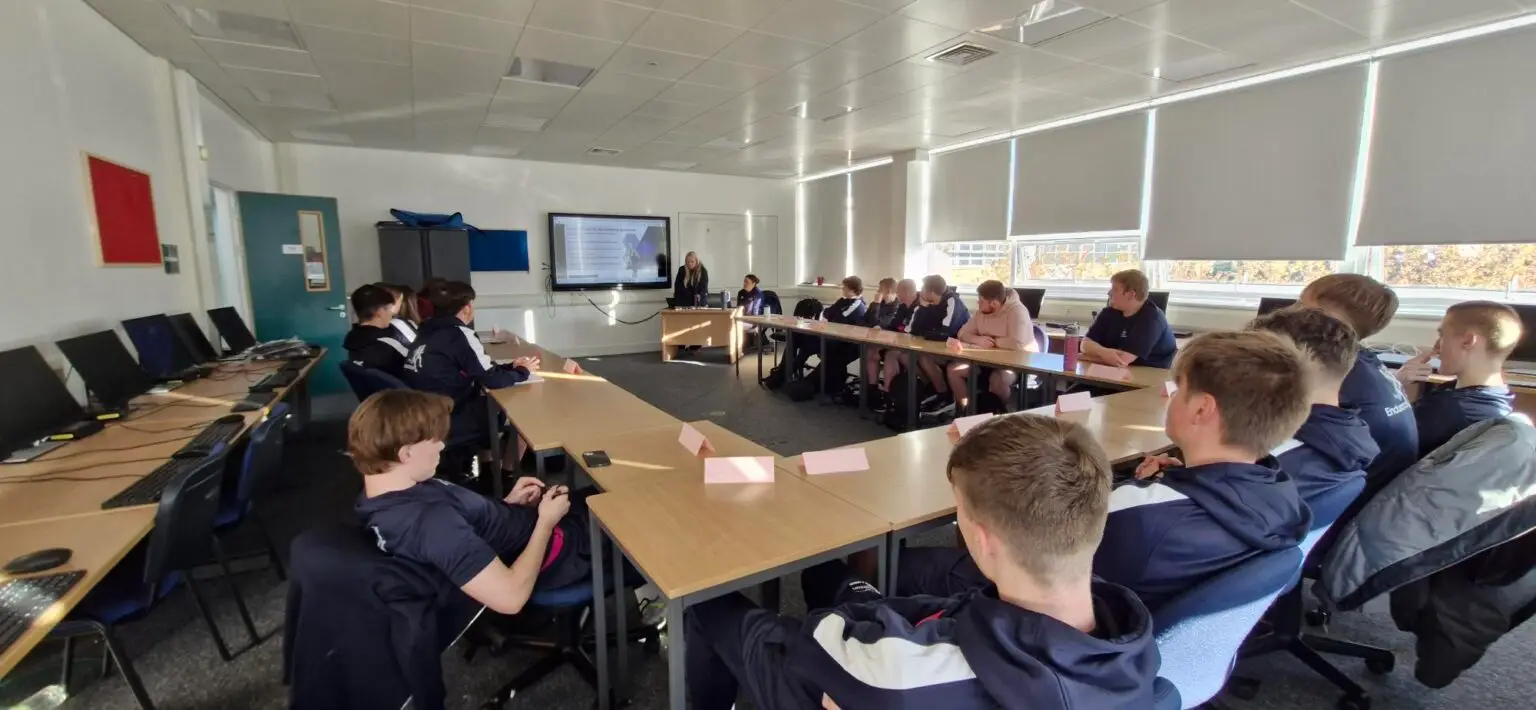
“One of the ways that we’ve adapted over the last few years is rather than delivering everything face to face, which is what we did pre-COVID, we now have e-learning opportunities as well. It’s the most common form that we deliver now and is what we usually deliver to coaches within colleges and universities. They’ll do a one-hour e-learning module and then will come and do the two-hour practical session. I think it works quite well because they have time to absorb and digest all that theoretical knowledge before they come to the practical.”
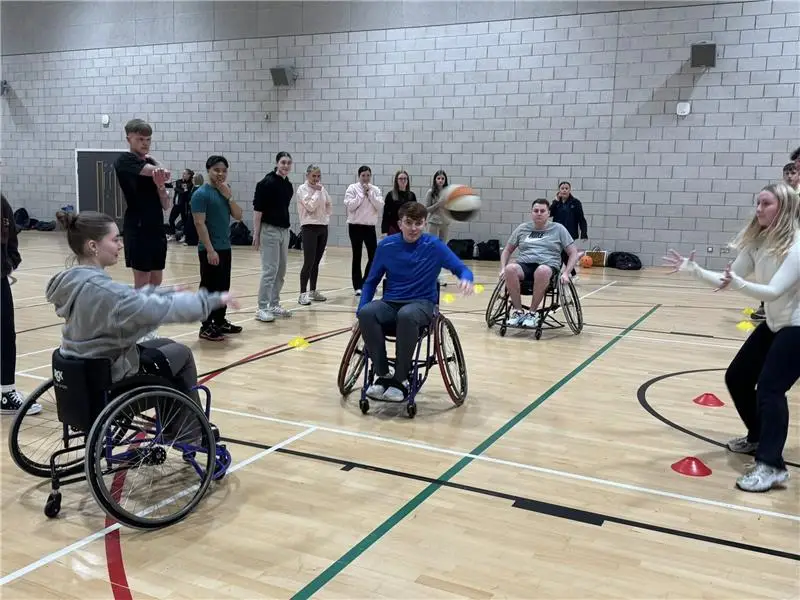
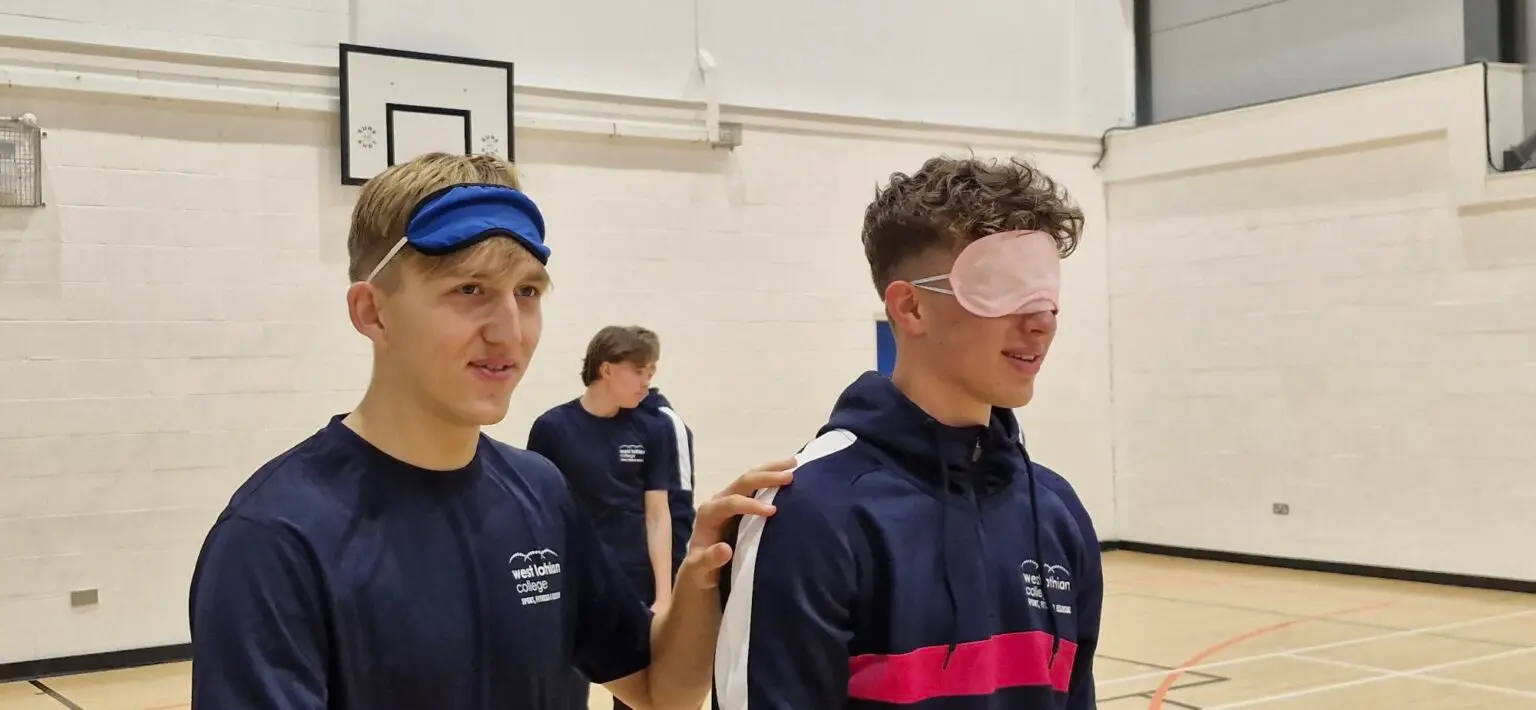
Designed to really bring home the impact that inclusion can have on participants, the practical element of the course uses simulation to build greater empathy and understanding. Alison went on to add:
“We spend the whole two-hour practical doing different sports. We’ll do sighted guiding and we bring along wheelchairs, crutches and eye shades. It’s to get them thinking about important question like ‘Here’s a drill – does it work if you use a wheelchair?’ and’ What’s it like to coach someone who might not be able to see?’. So, it’s getting them to think from the other side rather than experience it.”
But, with limited money or resource available to market the training to their key stakeholders, how have employers and educational establishments been able to discover SDS’ training offer?
“It’s pretty organic and by word of mouth to be honest,” said Shaw.
“We’ve been going out to universities and colleges for over ten years now. So, there are staff at colleges and universities that know about it and they’ll just they’ll get their requests in and it usually fills up pretty quickly. We’ve done a lot of work with Scottish Student Sport as well. They have given us contacts for universities and colleges that we might not ordinarily be in touch with.”
Turning to the impact that the training has had on some recipients of the training course, Alison was keen to highlight some of the most striking personal outcomes from the sessions:
“I attended Disability Inclusion Training in back 2011 and it was a game changer for me. Something clicked in my head, and it just changed my trajectory. I think it does that for quite a lot of students as well. They start to connect with us more and they’ll get involved in some of our events.
“I’ve got a college student up in Aberdeen who came on the course and just seemed to get it. He started volunteering with his local athletics club, doing the frame running coaching. He goes into schools and works with the additional support needs classes and he’s working in a local sports centre doing a lot of their inclusive planning. His whole life now is all about disability sports coaching.
“There are about sixty tutors in total that deliver our workshops and around 40% of those are people with disabilities. The training can sometimes be more effective coming from someone who has lived experience.”
So, what does the future hold for both UKDIT and disability inclusion and participation in sport and physical activity as a whole across Scotland? Not unsurprisingly, funding is still a major barrier. However, SDS know that their work is far from complete as they aim towards wider coverage outside of traditional sport and physical activity circles and more of a focus on specialisms.
“We’d like to get into more colleges and universities and into more degree programmes,” said Alison.
“At the moment, it’s mostly sports coaching and development in terms of colleges and university level. We’ve got PE, sports development, sports coaching and sports science as well as primary teaching. We’ve got full coverage with PE teachers, so every PE teacher that attends their degree programme in Scotland will get disability inclusion training. We want to just get the last few universities on board for primary teaching.
“We have started doing some work with allied health professionals as well so that we’ve got the courses for physiotherapy students, for sports rehabilitation and also for prosthetics and orthotics students. We also do some specialist courses sometimes as well. We go down to Edinburgh University and do a vision impairment-specific course, an autism-specific course and a severe and complex disabilities course.
“Sportscotland funds our core costs at the moment, but that doesn’t cover this particular programme. We have to beg and borrow to get these courses going and it’s very much funded on a year-to-year basis.
“We’ve been really fortunate this time that Motability has given us money to run this programme for the next two years. Our aim is that hopefully we can secure guaranteed, continuous funding with help from the Scottish Government. Our four-point Call to Action is urging government, local authorities, health boards, education providers, leisure trusts and third-sector organisations to recognise the rights of people with a disability. We are asking them to collaborate on systemic change and remove the significant barriers faced by people with a disability in accessing sport and physical activity.”
One further education establishment that recently benefited from the training was West Lothian College.
Based in Livingston in the heart of Scotland’s central belt between Glasgow and Edinburgh, it provides further and higher education to a diverse community of more than 8,000 students each year.
Having been the recipients of UKDIT training in October 2025, both the Higher National Certificate Sports Coaching and Development students and their tutors were keen to sing the praises of the course’s direct benefits as well as the knock-on effect for the sport and physical activity sector as a whole. As course tutor Graeme Mair said:
“Scottish Disability Sport have been at the forefront of education and awareness for the students at West Lothian College in helping them to adapt and shape their coaching practice to ensure inclusivity and success. It is allowing the next generation to understand the needs of the disabled athlete and apply realistic and achievable changes to their delivery. Students have consistently fed back how they have grown in confidence through gained experience and that it has opened up new paths of employment and inclusion in their delivery.”
This was a sentiment very much echoed by student Billy Stirling, who added:
“The work that the tutors did to educate us on how to practise maximum participation and avoid excluding anyone with a disability was really informative and new to me. Just little changes to my coaching such as various oral and visual clues that were so simple really helped me ensure my coaching sessions were far more inclusive after my training.”
If your organisation or educational establishment could benefit from this training, or support its delivery, you can find out more about UKDIT in Scotland by visiting SDS’ website at scottishdisabilitysport.com.