



Closing the strength gap in later life – implications for the physical activity workforce
Strength training is no longer a niche area of the fitness sector – it is increasingly recognised as central to public health
ukactive’s recent Shaping a New Era of Strength Training report highlights a striking generational divide. While younger adults are increasingly engaging in structured resistance training, older adults remain the least likely to meet the Chief Medical Officer’s muscle-strengthening guidelines.
Awareness among baby boomers sits at just 9%, falling to 7% among the silent generation. More than half of adults aged 65+ report undertaking no strength training at all, yet these are the individuals who stand to benefit most.
For those working within the physical activity profession, this presents a critical question:
What does effective strength training delivery look like for older adults and what workforce capabilities are required to support it?
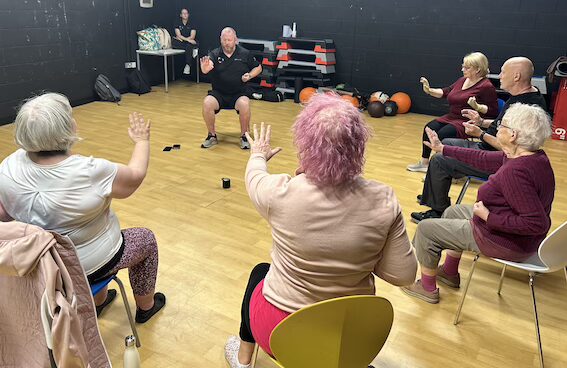
Recent survey data* of older adults participating in community-based strength and balance sessions offers useful insight.
The survey respondents were predominantly aged 70 and above. This is not a gym-loving demographic, and is a population often classified as being at increased risk of frailty, falls and loss of independence. National data suggests this group is least aware of strength training guidelines and least confident about how to begin. However, once engaged in structured, specialist-led provision, behaviour patterns change markedly.
Survey findings
- 47% reported undertaking strength training twice per week or more
- 50% reported engaging once per week
- Fewer than 4% reported participating less than weekly
This stands in contrast to national findings that over half of adults aged 65+ report no strength training at all.
While this survey is not population-representative, it demonstrates a critical workforce insight – engagement improves when delivery is designed specifically for older adults rather than adapted from general adult provision.
For practitioners, this reinforces that participation is influenced not simply by motivation, but by environment, instruction style and perceived safety.
Strength for daily living
Perhaps more significant than frequency are the functional changes reported.
Participants identified a range of functional improvements:
- 70% finding it easier to get up from a chair
- 43% reporting improved stair climbing
- 42% walking longer distances
- 35% carrying shopping more easily
- 34% improved ability to get down to and up from the floor
These independence indicators are aligned with fall prevention and lower limb strength maintenance.
For professionals working to CIMSPA standards, this highlights the importance of programming that reflects activities of daily living (ADLs), progressive resistance principles and balance integration – competencies embedded in the CIMSPA Professional Standard for Working with Older Adults and the broader Personal Trainer standard.
Strength training for older adults is not simply scaled-down adult programming. It requires specific understanding of:
- sarcopenia and age-related muscle decline
- balance systems and proprioception
- multimorbidity and medication considerations
- joint health and movement adaptation
- safe progression and regression.
Perceived strength and independence
Perceived self-efficacy is a significant determinant of adherence. From a behavioural perspective, confidence is as important as physiological adaptation. This lends a strong importance to the more qualitative survey findings:
- 43% reported feeling “much stronger”
- 50% reported feeling “a little stronger”
- Over 92% perceived strength improvement overall
- 68% believed participation was “definitely helping” them stay independent
- 30% believed it was “probably helping”
This reinforces the role of professionals in delivering not just technically correct programming, but psychologically supportive environments, competencies aligned with CIMSPA’s emphasis on professional behaviours, communication and client-centred practice.
Addressing the confidence barrier
The ukactive report identifies low confidence as a major barrier among older adults, particularly women and those with health conditions.
Common concerns include fear of injury, uncertainty around correct technique, intimidation within traditional gym environments or perception that strength training is “not for them”.
The survey findings suggest that when sessions are delivered in community settings, with clear instruction and progressive structure, these barriers can be reduced.
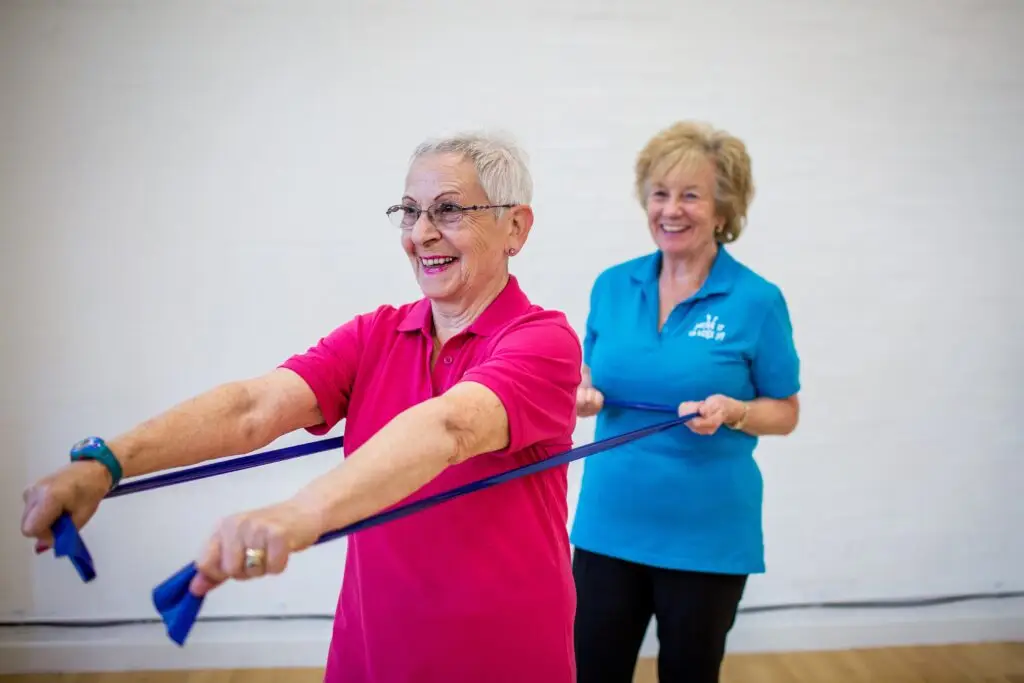
Key reported enablers included seated and standing options and gradual introduction of resistance. This is supported by delivery styles including clear demonstrations and cueing bolstered by repetition and reinforcement as well as social support.
For the workforce, this underlines the value of targeted qualifications and CPD mapped to the CIMSPA Professional Standard: Working with Older Adults, which emphasises safe, inclusive and appropriate programming for ageing populations. It also aligns with the expectation that practitioners operate within scope of practice while understanding referral pathways when required.
Beyond one session per week
The Chief Medical Officer’s guidelines recommend muscle-strengthening activity at least twice per week. One of the ongoing challenges is supporting older adults to move from weekly attendance to at least twice-weekly engagement.
The survey highlighted delivery strategies that supported increased frequency:
- Structured weekly strength and balance sessions
- Progressive circuit-style sessions for increased load tolerance
- Digital sessions enabling safe at-home participation
- Monthly instructor signposting to guided home exercise videos
- Printed educational resources reinforcing safe practice
This blended approach reflects evolving workforce capabilities in hybrid delivery, combining in-person instruction with digital extension. Importantly, digital provision was used to reinforce professional instruction rather than replace it.
Strength training as prevention infrastructure
Falls cost the NHS an estimated £2.3 billion annually. Muscle mass declines at approximately 1% per year after mid-life, accelerating without resistance stimulus. Sarcopenia and frailty contribute significantly to hospital admissions and social care demand.
Strength training for older adults should therefore be viewed not as optional fitness provision, but as a preventative intervention. For the profession, this reinforces the importance of workforce capability aligned with national priorities around prevention, healthy ageing and reducing health inequalities.
A profession ready to respond
The national data shows older adults are currently least likely to strength train. However, the survey data suggests something equally important: when strength training is delivered in environments that are age appropriate, professionally led and confidence building, older adults engage at levels significantly higher than national averages.
The issue may not be willingness – it may be workforce readiness and provision design.
As the sector continues to align with prevention-focused policy, the workforce plays a central role to play in ensuring strength training for older adults is delivered safely, effectively and confidently.
If strength is indeed foundational to independence, then equipping the workforce with the appropriate standards, qualifications and specialist competencies becomes not just desirable, but essential.
* Survey results from 179 older adults attending Move it or Lose it group exercise classes in community settings.
Move It or Lose It
Move It or Lose it provides CIMSPA-endorsed CPD and ongoing training to support fitness professionals to develop the skills and knowledge needed to deliver strength, balance and functional fitness programmes for ageing populations. Working with instructors across community settings, leisure facilities and online environments, Move it or Lose It contributes to the growing focus on prevention, independence and healthy ageing within the physical activity sector.
Thank you to CEO Julie Robinson for writing this piece exclusively for Move Professional.